Montego Bay · Toronto · Montreal
A history reclaimed.
How a childhood between Jamaica and Toronto, and a student movement in Montreal, shaped the questions she has asked ever since.
Origins
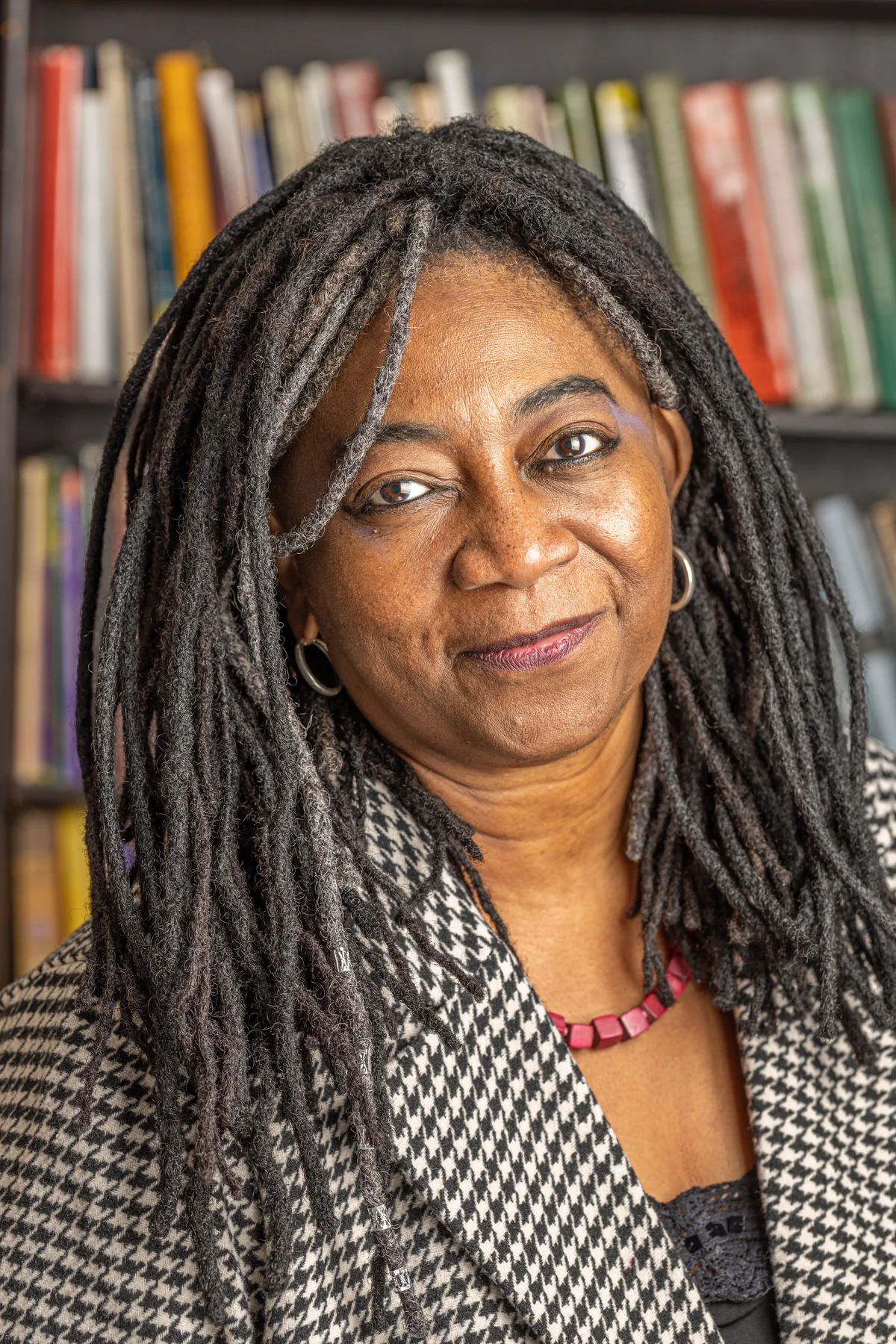
Kamari Clarke, formerly Maxine Claudia Clarke, was born in Montego Bay, Jamaica and moved with her family to Canada when she was a baby. She was raised in Toronto by immigrant parents — an engineer and a banker. On her maternal side she descends from a line of Jewish traders who travelled from Palestine to the Caribbean to trade diamonds. Her paternal line, though less fully documented, is understood to have been enslaved during plantation slavery in Jamaica, to have bought their freedom, and to have become agricultural landowners.
Coming of age
She came of age in 1970s Toronto in circumstances that made her deeply aware of the complexities of power and the privilege of education and social status. That early view from both sides of power and social mobility made her unusually attentive to social analysis and political engagement.
Through McMurrich Junior Public School, D. B. Hood Elementary, Fairbank Middle School and Oakwood Collegiate Institute, she was fully engaged in student life — winning public speaking competitions and Ontario Youth Awards, representing Ontario and Canada in national sports tournaments, and in 1983 co-founding the first Afro-Canadian club in a Toronto high school.
A new name
At Concordia University, between 1985 and 1988, she played a leading role in the university’s anti-apartheid position and worked with students at McGill to mobilise support for South Africa’s disenfranchised. The international sanctions movement owed its success to exactly this kind of organising in global cities, and hers was one such node in mid-1980s Montreal.
In this period she took the African name Kamari, as a rejection of the conditions that led people of African descent to carry the names of plantation owners. She graduated in Political Science–International Relations in 1988, and at the ceremony, on receiving the Concordia University Council on Student Life Award, announced her new name in a short speech to an audience of some five hundred people.
“These conditions continued to shape structural inequality in our world, and for this reason taking ‘Kamari’ as my new name will remind me of a history denied that can be reclaimed.”